
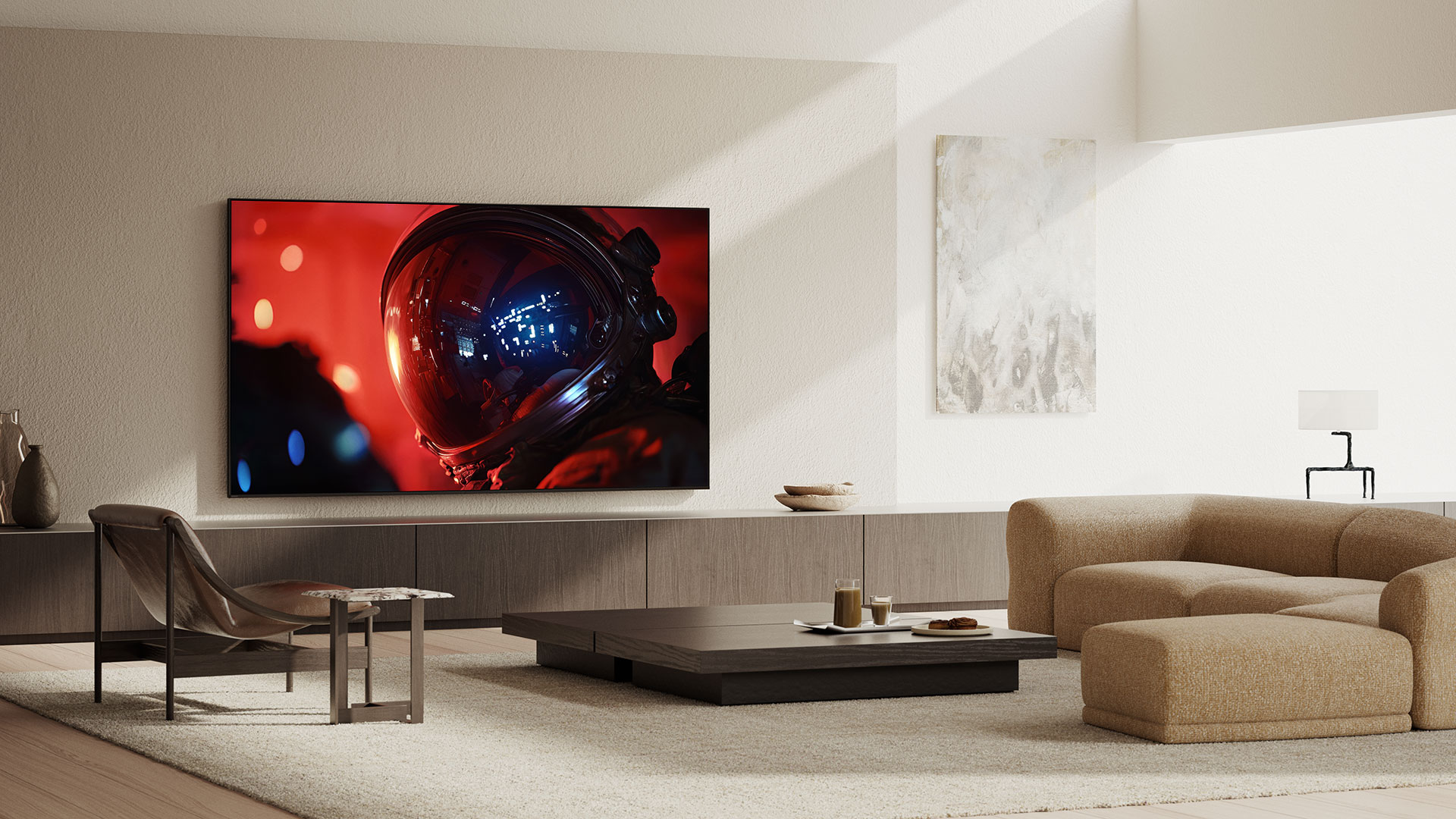
The Bravia 9 II utilizes clusters of red, green, and blue LEDs to achieve a wider color gamut than traditional blue-backlight displays. In practice, this translates to vibrant, punchy visuals, particularly in HDR content where highlights hit a measured 3,800 nits. Sony’s image processing remains a standout, delivering excellent color accuracy and deep, detailed shadows in Professional mode. The most tangible hardware upgrade over the cheaper Bravia 7 II is the anti-reflective screen, which effectively neutralizes glare from windows and lamps, making it arguably the best choice for bright living spaces.
However, the technology has limitations. While the increased dimming zones improve contrast, off-axis viewing reveals blooming issues, particularly with white elements against dark backgrounds. This is a notable step back from the pixel-perfect control found in Sony’s own Bravia 8 II OLED. Furthermore, with only two HDMI 2.1 ports, the connectivity suite feels dated compared to other high-end displays. For most viewers, the inherent contrast benefits of OLED technology—coupled with a lower entry price—make the Bravia 8 II a more compelling overall value. The 9 II is a technical marvel for specific, high-glare environments, but it struggles to justify its premium status against more versatile alternatives.
Comments (0)
No comments yet. Be the first!